
You will need:
- Ripe wine grapes
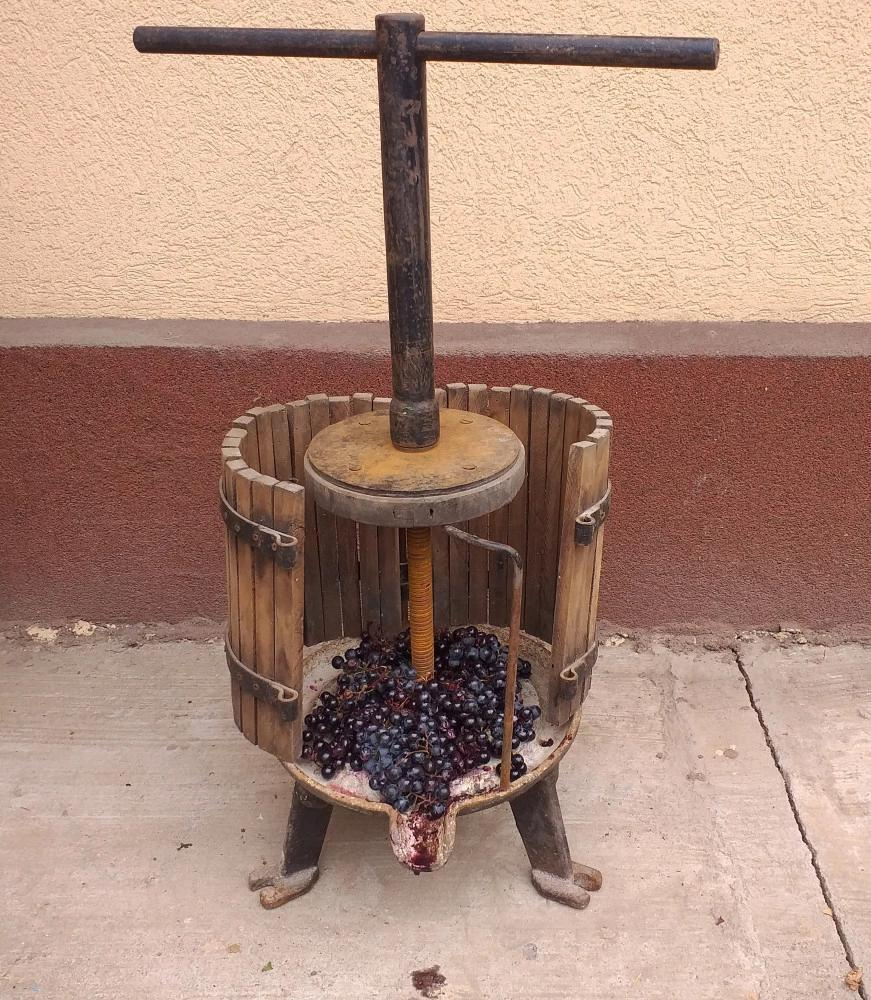
- Wine/fruit press
- Food-grade fermentation bucket or container
- Wine yeast
- Hydrometer, preferably
- Airlock
- Sanitizer
- Siphon
- Clean glass bottles
1. Harvest and sort the grapes
Choose ripe, healthy grapes. Remove leaves, stems, rotten or moldy grapes.
2. Crush the grapes
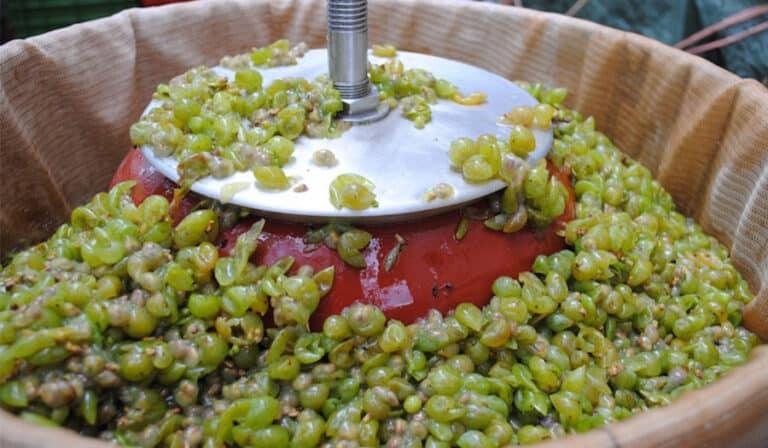
Lightly crush the grapes before pressing. This breaks the skins and allows the juice to flow more easily.
For red wine, you normally ferment the juice together with the grape skins initially.
3. Load the wine press
Put the crushed grapes into the press basket. Don’t overfill it.
Gradually apply pressure. Collect the juice in a sanitized food-grade container.
Avoid applying excessive pressure all at once because it can make pressing messy and may extract more bitter compounds from the skins and seeds.
4. Measure the grape juice
A hydrometer can measure the specific gravity, which helps estimate the potential alcohol and determine whether adjustments are needed.
For example, if your grape juice is naturally low in sugar, you may need to adjust it—but it’s better to measure rather than simply adding a fixed amount of sugar.
5. Add wine yeast
Add an appropriate wine yeast according to the manufacturer’s instructions.
For red wine, fermentation can begin with the juice and skins together. The skins should be kept submerged and the mixture managed according to the yeast/wine recipe.
6. Ferment
Place the juice in a sanitized fermentation vessel and use an airlock. Fermentation produces carbon dioxide, so never seal actively fermenting wine in a completely airtight container.
Keep the fermentation temperature appropriate for the yeast you’re using.
7. Separate the wine
Once primary fermentation is finished, transfer the wine away from sediment using a sanitized siphon.
For red wine, you would normally have already pressed the skins and seeds, then continue fermentation/aging with the extracted wine.
8. Age the wine
Allow the wine to mature in a suitable sanitized vessel. Rack it off sediment when necessary.
The wine should be completely finished fermenting before bottling.
9. Bottle
When fermentation is complete and the wine is clear and stable, siphon it into sanitized bottles and seal them with appropriate wine closures.
Important: Don’t bottle wine that is still fermenting. Residual fermentation can produce enough pressure to break bottles.
🍷 Simple process
Grapes → Sort → Crush → Wine Press → Grape Juice → Yeast → Fermentation → Press/Separate → Aging → Bottling
If you’re planning to use fresh grapes from your own grapevines, I can also give you a complete 10-liter homemade grape-wine recipe with exact quantities, pressing schedule, sugar measurements, fermentation days, and bottling steps.